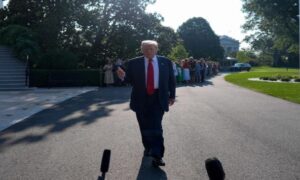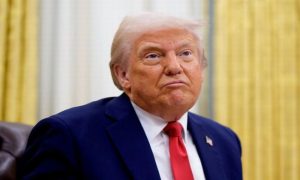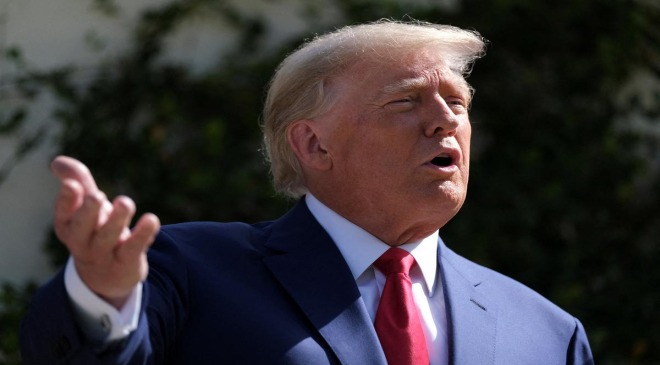
US President Donald Trump has reignited one of the most contentious constitutional battles in America by signing two new executive orders aimed at restricting birthright citizenship and cracking down on “birth tourism.” The orders were signed on August 6, even though a federal court order continues to block the implementation of Trump’s broader 2025 attempt to end automatic citizenship for many children born on US soil.
The move is significant not only because of what Trump signed, but because of how he signed it despite an ongoing legal blockade. His earlier executive order – issued on the first day of his second term in January 2025 – sought to deny citizenship to children born in the United States if neither parent was a US citizen or lawful permanent resident, including parents who were in the country on temporary visas such as H-1B, L-1, F-1 and tourist visas. Multiple federal judges blocked that order, calling it likely unconstitutional, and a class-wide injunction issued by a federal judge in New Hampshire remains in place while the legal fight continues. The Supreme Court has not yet upheld Trump’s broader effort to rewrite the long-standing interpretation of the 14th Amendment.
Yet Trump chose to press ahead with a narrower set of orders that target specific categories such as birth tourism, children of foreign government agents, and people classified as “alien enemies.” The administration argues these fall within exceptions to the Citizenship Clause rather than directly overturning birthright citizenship. Legal experts, however, say the new orders are likely to face fresh court challenges.
At the signing ceremony, Trump made clear that he sees the issue as a political and constitutional fight. “They’ve taken birthright citizenship and they’ve made a joke out of it,” he said, arguing that the 14th Amendment is being abused by people traveling to the United States solely to secure citizenship for their children. He also criticised the Supreme Court’s recent ruling against his earlier order, saying it was “very unfortunate” for the country.
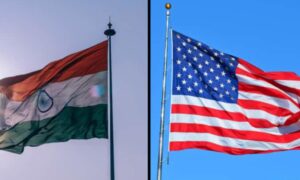
What does this mean for the large Indian community in the United States – particularly H-1B professionals, L-1 executives, F-1 students and their families?
Will Trump’s Order Affect Indians?
A baby born today in the United States to Indian parents who are legally present on H-1B, H-4, L-1, L-2, F-1 or other temporary visas is still considered a US citizen at birth under current law. That is because the controlling constitutional rule remains the 14th Amendment, which states:
All persons born or naturalised in the United States, and subject to the jurisdiction thereof, are citizens of the United States.
For more than a century, the Supreme Court has interpreted this broadly, especially in the landmark 1898 case United States v Wong Kim Ark, which affirmed citizenship for a child born in the US to non-citizen parents who were lawfully present. The traditional exceptions have been extremely narrow: children of foreign diplomats and children born to enemy forces occupying US territory.
Indian nationals form one of the largest groups of temporary visa holders in the United States.
- H-1B: Technology, engineering, healthcare and finance professionals
- L-1: Managers, executives and specialised employees transferred within multinational companies
- F-1: Students pursuing higher education
- H-4 and L-2: Spouses and children of primary visa holders
Trump’s January 2025 order explicitly included temporary visa categories among those whose children could be denied citizenship if neither parent was a US citizen or green-card holder. That is why the Indian community reacted with alarm when the order was first issued. But that broader order has been blocked and has not taken effect.
What Do Trump’s New 2026 Orders Target?
According to the White House and reporting on the new measures, the administration is focusing on:
- Foreign nationals who travel to the US specifically to give birth (“birth tourism”)
- Children of foreign government employees or agents
- Individuals designated as “alien enemies” under US law
- Certain commercial or surrogacy-related arrangements allegedly used to secure citizenship benefits
The orders do not clearly state that all H-1B, L-1 or F-1 visa holders are excluded from birthright citizenship. However, immigration lawyers note that the administration is continuing to test the boundaries of the 14th Amendment through narrower categories after losing ground in court on the broader approach.
Trump argues that the phrase “subject to the jurisdiction thereof” has been interpreted too broadly. His administration says temporary visitors and some other categories do not owe the kind of complete allegiance that the framers of the 14th Amendment intended.
Most constitutional scholars disagree. They point out that US courts have long treated people who are lawfully present in the country – including students, workers and tourists – as being subject to US law and therefore within the jurisdiction of the United States for purposes of birthright citizenship. The Supreme Court’s modern jurisprudence has consistently favored the broader interpretation.
For Indian temporary visa holders to lose birthright citizenship for their US-born children, one of the following would likely have to happen:
- The Supreme Court would have to uphold a restrictive interpretation of the 14th Amendment, or
- Congress and the courts together would have to create a new constitutional framework, or
- A constitutional amendment would have to be ratified, which is politically extremely difficult.
At present, none of these has happened.
The bottom line is that Trump has not ended birthright citizenship for Indian H-1B, L-1 or student visa holders. What he has done is reopen a constitutional battle that many believed was settled more than a century ago. His new orders are designed to chip away at specific categories after courts blocked his broader attempt to rewrite the rules of American citizenship.
Source : MSN