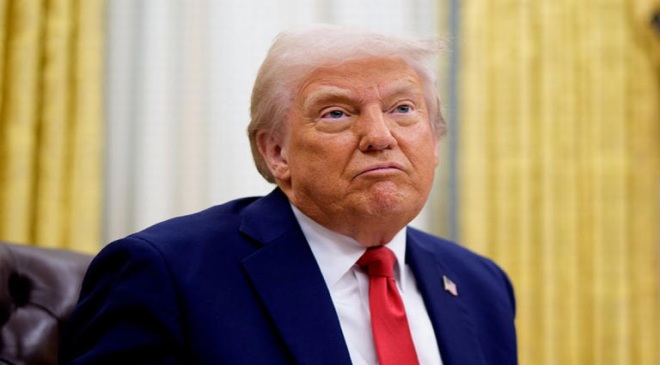
While President Donald Trump promises lower mortgage rates and easier homeownership, leading economists caution that his plan could end up raising house prices and worsening the U.S. housing shortage.
Also Read:Bitcoin’s freefall approaches $80,000 as precious metals also tank

The president revealed that he had ordered his “representatives” to buy $200 billion in mortgage bonds, claiming the move would “drive mortgage rates down, monthly payments down, and make the cost of owning a home more affordable.”
However, Mark Zandi, chief economist at Moody’s Analytics, warned that the plan is problematic.
On X, he wrote that artificially increasing housing demand will “result in higher house prices, all else equal.”
Also Read:Elon Musk makes major U-turn after Tesla suffers profit decline
Bond purchases underway

When institutions, usually the Federal Reserve or Treasury Department, buy mortgage-backed securities, the added demand pushes down yields on these bonds, which can help lower mortgage rates.
Also Read:Trump reveals why he closes his eyes during meetings
While Trump’s post did not originally identify the buyers, Bill Pulte, director of the Federal Housing Finance Agency, later clarified that Fannie Mae and Freddie Mac would purchase the bonds.
According to Pulte, both government-sponsored enterprises are in the midst of the “massive, great, and growing mortgage bond purchases” and are “doing a great job on this buy.”
Experts raise concerns

However, as Zandi put it, Trump’s plan “will do little to make home-buying more affordable,” because it would likely boost demand and worsen the “severe housing shortage in the U.S.”
Zandi is not the only expert raising concerns. Other specialists, including Realtor.com Senior Economist Joel Berner, have voiced similar warnings.
Also Read:Tesla quietly rolls out Model Y loaded with new AI4.5 computer
Berner told Newsweek, “Even if mortgage rates did dip temporarily…the resulting boost to buyer demand could put upward pressure on home prices, offsetting some of the intended affordability relief.”
He noted that while sellers, particularly in Southern and Western markets, might benefit, first-time buyers “would still face heightened competition” and “continue to struggle to put together a sufficient down payment.”
Berner emphasized that the main issue for housing affordability is supply, adding that “without meaningful gains in construction, the long-term impact would be minimal, aside from a potential one-time boost to home prices.”
Also Read:Your daily horoscope: January 29, 2026 predictions
Will the plan work?

Other analysts argue that the recent drop in mortgage rates reduces the need for a cash injection.
“Theoretically it would work, but what I’m hearing is it wouldn’t really be worth it because they’re already on a downward trend,” Neal Hayes, founder of Neal Hayes Mortgages, told Newsweek.
He noted that the $200 billion was “not a huge amount” for an initiative like this and warned that the plan would reduce rates by only “quite a small margin” if implemented.
Source :Msn