Tesla’s Full Self-Driving software is among the company’s defining features, at least if you ask someone from the company’s loyal (and highly online) fanbase. However, according to Tesla’s own Chief Financial Officer, Vaibhav Taneja, only a fraction of owners actually use the service. On a Q3 earnings call, Taneja admitted that Tesla has made “decent progress” towards getting more customers to subscribe to FSD, but said revenue was down last quarter compared to the same period in 2024.
Also Read:3 Reasons Tesla Stock Was Up Today
“Total paid FSD customer base is still small, around 12% of our current fleet.”
– Vaibhav Taneja, Tesla CFO
On the Model 3 and Model Y, Tesla currently charges $8,000 for its “Full Self-Driving (Supervised)” software, which, according to the company’s website, says “your car will be able to drive itself almost anywhere with minimal driver intervention.” Tesla previously charged $12,000 prior to 2024. The software is also included at no cost on the Model S, Model X, and Cybertruck Cyberbeast. The American automaker has faced public and legal scrutiny over the deceptive marketing of its software’s capabilities and misleading name.
Also Read:The one person who can stop Trump has two months left to do it
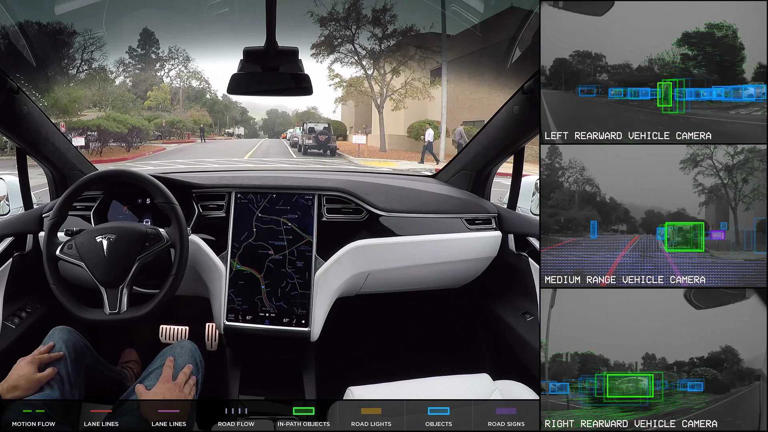
Tesla did not provide an exact figure of revenue for Q3 2025, but says FSD brought in less than it did in 2024 when it generated $326 million. There is also no data on how many customers are currently paying for FSD. Across the entire company, Tesla reported $28.1 billion in revenue for Q3 2025. Tesla says the one-time FSD purchases may have been higher last year thanks to added features such as Actually Smart Summon and a Cybertruck-specific version
Also Read:The Latest: Trump arrives in Japan, where he’ll meet new Prime Minister Takaichi
A recent version 14 updated to FSD did bring back a “Mad Max” mode that allegedly ignores speed limits and makes more frequent lane changes, which comes months after Tesla paid out a $243 million judgment in an Autopilot-related crash that resulted in a loss of life. Tesla has reportedly filed a motion to challenge the verdict. This would not be the first time Tesla has programmed a car to break a law intentionally, as FSD was previously investigated by the National Highway Traffic Safety Administration for running red lights and stop signs.
Also Read:Putin ally claims Ukraine war’s end is ‘close’ despite Trump meeting cancellation
Promises Made, Promises Broken
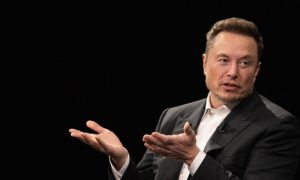
If we had to guess why only 12% of Tesla owners are buying FSD, our finger would point pretty squarely at the company’s CEO, Elon Musk, who has repeatedly overpromised and underdelivered on his goals for a “fully self-driving car.” The term itself is pretty self-explanatory: the car drives itself. It should not need a human driver. There are, of course, official industry terms for how autonomous a car can be (FSD is only Level 2), but Musk has repeatedly promised Tesla would get to Level 5 since 2013. These are some of Musk’s boldest claims with regard to autonomy:
- 2013: 90% of miles would be driven autonomously by 2016 (BROKEN)
- 2014: 90% of highway miles could be on Autopilot by 2015 (KEPT)
- 2015: Full autonomy by 2018 (BROKEN)
- 2015: Full autonomy by 2017 (BROKEN)
- 2016: Summon your car anyway by 2018 (BROKEN)
- 2016: Los Angeles to New York without touching the wheel by 2017 (BROKEN)
- 2020: L5 autonomy this year (BROKEN)
- 2020: Over one million autonomous robotaxis in 2021 (BROKEN)
- 2025: Autonomous ride hailing by end of year (TBD)
There were customers who leased a Tesla vehicle for three or four years, paid $12,000 for the Full Self-Driving Beta under the assumption it would eventually be able to fully drive itself without a driver, then turned in their cars having never received the full product that Musk touted for years. That could explain why 88% of Tesla customers are hesitant to hand over $8,000 for a product that still has not shown up after years of broken promises.