Those officials say that falling revenues mean Russia’s budget deficit will continue to widen without further tax increases. At the same time, high interest rates and coercive corporate lending to finance the war in Ukraine are increasing pressure on the banking system, the report said.
One Moscow businessman, speaking anonymously to The Post, estimated the crisis could hit in “three or four months.” He added that real inflation appears to be rising far faster than the 6 percent officially reported by the government, the central bank keeping rates at 16 percent.
Also Read:Fact focus: Trump says tariffs have created an economic miracle. The facts tell a different story
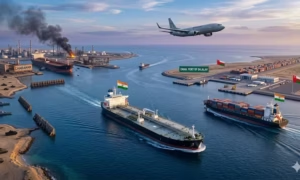
The exploding budget deficits are largely due to falling oil revenues. Slipping prices and recent action by Western countries to interdict Moscow’s “shadow fleet” of tankers present both economic and political risks to the Kremlin, the report stated.
Also Read:Trump threatens to shred Constitution for third term and admits possibility is ‘exciting’
“This is a threat not just for the economy, but also it’s a political question about whether Russia can allow such actions [forcible shipping disruptions] without losing its political reputation,” The Post quoted a Russian academic “close to senior Moscow diplomats.”
After two years of growth fueled by war spending, during which GDP rose by more than 4 percent annually, the Russian economy slipped into a deep downturn in 2025, The Moscow Times reported earlier. Growth slowed to 1 percent last year, 20 of 28 civilian industrial sectors contracted, and companies of all sizes began struggling to service their debts. The central bank estimates that more than 10 trillion rubles ($130 billion) in loans on bank balance sheets have become nonperforming.
Also Read:Tesla’s latest lineup tweaks: no more ‘Standard’ branding and a cheaper AWD Model Y
Bloomberg reported Jan. 31 that the Kremlin is racing to identify up to 1.2 trillion rubles ($16 billion) in new revenue sources to shore up key budget metrics. That sum represents an additional 0.5 percent of GDP on top of this year’s planned 1.6 percent deficit, as oil export earnings fall and the ruble remains unexpectedly strong.
Also Read:Modi officials move to allay fears US deal is bad for India
On Feb. 2, The Moscow Times highlighted findings by the Kremlin-aligned Center for Macroeconomic Analysis and Short-Term Forecasting, which said Russia has entered a banking crisis under formal criteria: over 10 percent of banking assets are now classified as non-performing loans.
Source :Msn