The Trump administration’s October 8, 2026, decision to suspend Microsoft, Adobe, Cognizant, Infosys, TCS, Wipro, HCL Technologies, and Capgemini from the PERM labor certification program is deeply troubling. While the government claims it is protecting American workers, this policy risks damaging American businesses, discouraging investment, and ultimately eliminating more American jobs than it protects.
The consequences extend far beyond green card applications.
Not Just Green Cards — H-1B Workers Are Also Suffering
The PERM suspension directly affects employer-sponsored permanent residency applications, including pending labor certifications. However, in our immigration practice, we are also witnessing serious difficulties involving H-1B extensions, transfers, and amendments for employees of companies facing increased government scrutiny.
These are separate immigration processes, and the PERM suspension does not automatically prohibit H-1B approvals. Nevertheless, the broader enforcement environment is creating substantial uncertainty for employers and their employees.
Consider an Indian professional who has legally worked in the United States for ten years, purchased a home, raised American-born children, and paid substantial taxes. Suddenly, that employee faces uncertainty about green card sponsorship while also worrying about future H-1B extensions or changing employers.
Why should employees who have followed every immigration rule suffer because their employers are under investigation?
Microsoft Creates American Jobs — Not Just H-1B Jobs
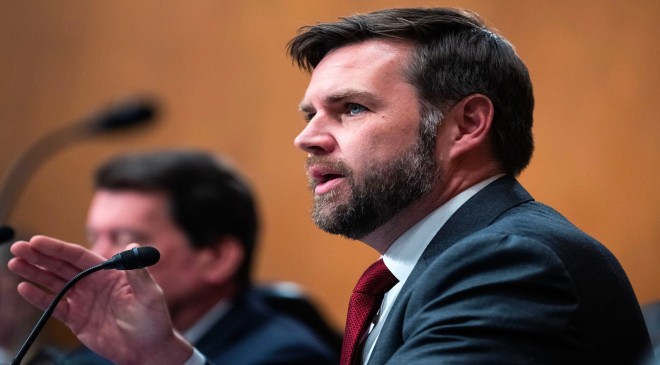
Vice President J.D. Vance criticized Microsoft for laying off approximately 6,000 employees while filing thousands of H-1B petitions. However, Microsoft clarified that approximately 80% of its recent H-1B applications involved extensions or status changes for existing employees, not hiring new foreign workers.
An H-1B extension does not mean another American has lost a job. Presenting extensions as new foreign hiring is misleading.
Furthermore, companies like Microsoft have created enormous employment opportunities for Americans through technology development, infrastructure investment, construction, and supporting industries.
Protecting American workers is legitimate. But ignoring these companies’ overall contributions to American employment is economically shortsighted.
Every Technology Job Supports Other American Jobs
The administration must understand that a technology professional contributes far beyond the workplace.
An H-1B employee rents or purchases a home, shops at supermarkets, eats at restaurants, purchases vehicles, pays taxes, and supports numerous local businesses.
These activities generate employment for construction workers, real estate professionals, restaurant employees, grocery workers, and service providers.
If restrictive immigration policies force technology companies to relocate operations to Canada, India, or other countries, these economic benefits will move with them.
A software engineer working in Hyderabad instead of Houston will spend money in Hyderabad, not Houston. American communities lose those economic benefits.
Companies Have Little Incentive to Sponsor Unnecessary Workers
The administration also overlooks the substantial expense and complexity of H-1B sponsorship.
Employers must pay legal fees, government filing fees, comply with prevailing wage requirements, maintain documentation, and accept significant regulatory responsibilities.
Why would a company voluntarily undertake these expenses and obligations if it could readily recruit qualified American workers for the same positions?
This does not mean abuses never occur. Employers violating immigration or labor laws should face meaningful penalties. But investigations must establish wrongdoing rather than presume that employing foreign professionals constitutes misconduct.
America Risks Losing Its Competitive Advantage
Indian professionals already face extraordinarily long employment-based green card backlogs. Suspending PERM processing adds another obstacle for people who have invested years building their careers in America.
The United States cannot simultaneously demand global leadership in artificial intelligence, advanced technology, and scientific innovation while making it increasingly difficult for international talent to remain.
The solution is straightforward: investigate actual fraud, punish proven violations, protect American workers, and preserve legitimate employment-based immigration.
America should not confuse protecting American jobs with driving jobs out of America.
If these policies encourage companies to expand overseas instead of in the United States, American workers and the American economy will ultimately pay the price.
Source : MSN