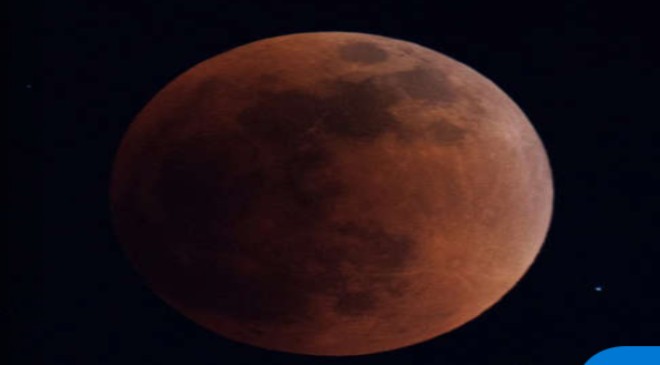
The phenomenon of a Full Moon arises when our planet, Earth, is precisely sandwiched between the Sun and the Moon. This alignment ensures the entire side of the Moon that faces us gleams under sunlight. Thanks to the Moon’s orbit around Earth, the angle of sunlight hitting the lunar surface and being reflected back to our planet changes. That creates different lunar phases.
The next Full Moon in 2024 is at 9:08 pm. ET on Friday, June 21, and is called the Strawberry Moon.
We’ll update this article multiple times each week with the latest moonrise, moonset, Full Moon schedule, and some of what you can see in the sky each week.
Here’s the complete list of Full Moons this year and their traditional names.
2024 Full Moon schedule and names of each
(all times Eastern)
- Jan. 25 – 12:54 p.m. – Wolf Moon
- Feb. 24 -7:30 a.m. – Snow Moon
- March 25 – 3 a.m. – Worm Moon
- April 23 – 7:49 p.m. – Pink Moon
- May 23 – 9:53 a.m. – Flower Moon
- Friday, June 21 – 9:08 p.m. – Strawberry Moon
- Sunday, July 21 – 6:17 a.m. – Buck Moon
- Monday, Aug. 19 – 2:26 p.m. – Sturgeon Moon
- Tuesday, Sept. 17 – 10:34 p.m. – Corn Moon
- Thursday, Oct. 17 – 7:26 a.m. – Hunter’s Moon
- Friday, Nov. 15 – 4:28 p.m. – Beaver Moon
- Sunday, Dec. 15 – 4:02 a.m. – Cold Moon
The phases of the Moon in June 2024
The images below show the day-by-day phases of the Moon In June. The Full Moon in June is at 6:17 a.m. on Friday, June 21, and is colloquially called the Strawberry Moon.

The moonrise and moonset schedule this week
The following is adapted from Alison Klesman’s The Sky This Week article, which you can find here.
*Times for sunrise, sunset, moonrise, and moonset are given in local time from 40° N 90° W. The Moon’s illumination is given at 12 P.M. local time from the same location.
Read More : Federal Judge Suspends Joe Biden’s Plan to Slash Credit Card Late Fees to $8
Wednesday, June 5
The Moon now passes 5° north of Jupiter at 10 A.M. EDT. The slim crescent will be a real challenge to observe, although according to longtime Astronomy contributor Stephen James O’Meara, there are some unique and beautiful effects to be seen if you can manage it.
See if you can catch the nearly New Moon in the sky shortly before dawn. If you do, you might experience the lunar blackdrop effect, which can cast dark stripes on the last illuminated bits of the lunar crescent. These stripes aren’t real, but are instead an illusion caused by both the diffraction of sunlight and the turbulence of our atmosphere, through which we are viewing the Moon (and all other celestial objects). In fact, you might notice these stripes dance, waver, or disappear and reappear if you’re able to follow the slim crescent over time. The more turbulent the atmosphere – and the poorer your local seeing – the more likely you are to see the stripes.
Particularly intrepid observers can try to catch this effect again tomorrow morning, just hours before the Moon finally reaches its New phase.
Sunrise: 5:32 A.M.
Sunset: 8:26 P.M.
Moonrise: 4:26 A.M.
Moonset: 8:05 P.M.
Moon Phase: Waning crescent (1%)
Thursday, June 6
New Moon occurs at 8:38 A.M. EDT this morning, leaving our sky dark, moonless, and perfect for deep-sky observers.
Longtime observers know that although the images of galaxies and nebulae we see are often stunningly multicolored, most objects don’t show off vivid hues through the eyepiece when visually observing. But some do, and one of these is NGC 7662, also called the Blue Snowball and the brightest planetary nebula in the constellation Andromeda.
Read More : Donald Trump’s Attorney Shakes Him During Trial
Sunrise: 5:32 A.M.
Sunset: 8:26 P.M.
Moonrise: 5:11 A.M.
Moonset: 9:15 P.M.
Moon Phase: New
Friday, June 7
Sunrise: 5:31 A.M.
Sunset: 827 P.M.
Moonrise: 6:04 A.M.
Moonset: 10:15 P.M.
Moon Phase: Waxing crescent (2%)
The phases of the Moon
The phases of the Moon are: New Moon, waxing crescent, First Quarter, waxing gibbous, Full Moon, waning gibbous, Last Quarter, and waning crescent. A cycle starting from one Full Moon to its next counterpart, termed the synodic month or lunar month, lasts about 29.5 days.
Though a Full Moon only occurs during the exact moment when Earth, Moon, and Sun form a perfect alignment, to our eyes, the Moon seems Full for around three days.
Different names for different types of Full Moon
There are a wide variety of specialized names used to identify distinct types or timings of Full Moons. These names primarily trace back to a blend of cultural, agricultural, and natural observations about the Moon, aimed at allowing humans to not only predict seasonal changes, but also track the passage of time.
For instance, almost every month’s Full Moon boasts a name sourced from Native American, Colonial American, or other North American traditions, with their titles mirroring seasonal shifts and nature’s events.

Wolf Moon (January): Inspired by the cries of hungry wolves.
Snow Moon (February): A nod to the month’s often heavy snowfall.
Worm Moon (March): Named after the earthworms that signal thawing grounds.
Pink Moon (April): In honor of the blossoming pink wildflowers.
Flower Moon (May): Celebrating the bloom of flowers.
Strawberry Moon (June): Marks the prime strawberry harvest season.
Buck Moon (July): Recognizing the new antlers on bucks.
Sturgeon Moon (August): Named after the abundant sturgeon fish.
Corn Moon (September): Signifying the corn harvesting period.
Hunter’s Moon (October): Commemorating the hunting season preceding winter.
Beaver Moon (November): Reflects the time when beavers are busy building their winter dams.
Cold Moon (December): Evocative of winter’s chill.
In addition, there are a few additional names for Full Moons that commonly make their way into public conversations and news.
Super Moon: This term is reserved for a Full Moon that aligns with the lunar perigee, which is the Moon’s nearest point to Earth in its orbit. This proximity renders the Full Moon unusually large and luminous. For a Full Moon to earn the Super Moon tag, it should be within approximately 90 percent of its closest distance to Earth.
Read More : Can Trump be president if he’s convicted or sentenced to prison?
Blue Moon: A Blue Moon is the second Full Moon in a month that experiences two Full Moons. This phenomenon graces our skies roughly every 2.7 years. Though the term suggests a color, Blue Moons aren’t truly blue. Very occasionally, atmospheric conditions such as recent volcanic eruptions might lend the Moon a slightly blueish tint, but this hue isn’t tied to the term.
Harvest Moon: Occurring closest to the autumnal equinox, typically in September, the Harvest Moon is often renowned for a distinct orange tint it might display. This Full Moon rises close to sunset and sets near sunrise, providing extended hours of bright moonlight. Historically, this was invaluable to farmers gathering their produce.
Common questions about Full Moons
What is the difference between a Full Moon and a New Moon? A Full Moon is witnessed when Earth is between the Sun and the Moon, making the entire Moon’s face visible. Conversely, during a New Moon, the Moon lies between Earth and the Sun, shrouding its Earth-facing side in darkness.
How does the Full Moon influence tides? The Moon’s gravitational tug causes Earth’s waters to bulge, birthing tides. During both Full and New Moons, the Sun, Earth, and Moon are in alignment, generating “spring tides.” These tides can swing exceptionally high or low due to the combined gravitational influences of the Sun and Moon.
Read More : The Key Differences Between A Passport Card & A Passport Book
Here are the dates for all the lunar phases in 2024:
| New | First Quarter | Full | Last Quarter |
|---|---|---|---|
| Jan. 3 | |||
| Jan. 11 | Jan. 17 | Jan. 25 | Feb. 2 |
| Feb. 9 | Feb. 16 | Feb. 24 | March 3 |
| March 10 | March 17 | March 25 | April 1 |
| April 8 | April 15 | April 23 | May 1 |
| May 7 | May 15 | May 23 | May 30 |
| June 6 | June 14 | June 21 | June 28 |
| July 5 | July 13 | July 21 | July 27 |
| Aug. 4 | Aug. 12 | Aug. 19 | Aug 26 |
| Sept. 2 | Sept. 11 | Sept. 17 | Sept. 24 |
| Oct. 2 | Oct. 10 | Oct. 17 | Oct. 24 |
| Nov. 1 | Nov. 9 | Nov. 15 | Nov. 22 |
| Dec. 1 | Dec. 8 | Dec. 15 | Dec. 22 |
| Dec. 30 |