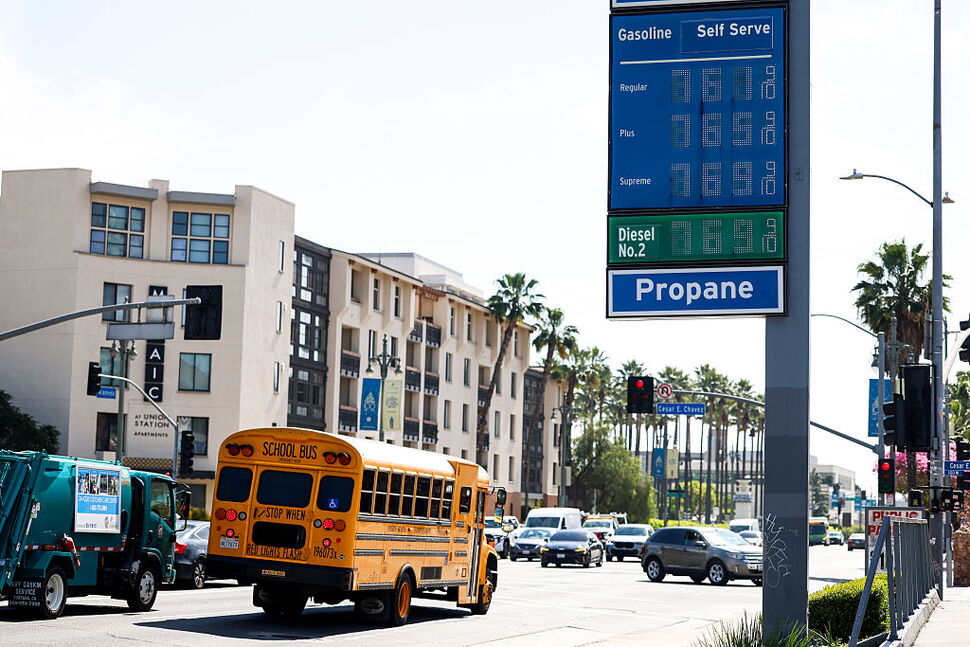
The unprecedented diesel prices will mean higher prices for everything from food to Black Friday deals and winter heating.
Diesel prices rose to new historic highs Friday at $6.44 a gallon as experts warned that the steady rise for the fuel used to transport most U.S. consumer goods will lead to a wide range of increased costs.
Gasoline prices also climbed to a national average of $4.46 per gallon and hit $6.11 a gallon in California as traders drove up global fuel prices because of the Iran war and the Russia-Ukraine War. Some economists predict gas could reach $4.50 a gallon in coming days and diesel could sell for $6.60.
While the vast majority of American drivers don’t use diesel-powered vehicles, just about everything they buy is transported by truck or train – and most are powered by diesel.
Here’s what the higher diesel prices mean for consumer budgets:
Food Prices
U.S. farmers are just starting to harvest many crops and most rely on diesel for farm equipment as they start to run their hulking combines and tractors.
Costs to move produce from California are up between 40% and 120% compared to a year ago, Dean Croke, principal analyst at DAT Freight & Analytics, told Reuters. Croke said diesel prices exceeded $8 per gallon in some parts of California.
In South Dakota, farmer Drew Peterson told Reuters he expects to spend $1,500 daily to fuel one of his combines, double what he paid last year.
Consumers probably won’t be hit with price increases for many products for months. The steepest increases will probably be for fresh produce and meat because more diesel is needed to refrigerate those goods during transport.
Most commercial fishing boats also run on diesel, meaning higher seafood prices on top of higher bait prices that the commercial fishing industry has already been dealing with – because of the higher diesel prices.
School Buses
Across the U.S., about 90% of the school buses that transport children run on diesel. Administrators are struggling to determine how they’ll pay for the increased costs that almost always get passed down to local taxpayers.
In Boise, Idaho, officials are researching the possibility of reducing student pickup and drop off spots and are using eight electric buses to determine whether they will reduce overall transport costs.
Other school districts are changing their routes and putting more school kids on fewer buses. About half of the nation’s public transportation buses run on diesel fuel, forcing municipal officials to pay much more to run them.
Online Shipping
Retail shippers like UPS and FedEx tack on fuel surcharges for shipping that are based on the average price for a gallon of diesel fuel. Those surcharges are around 30% and rising, and will get passed on to shoppers.
Prices could get especially high during the holiday season. Companies like Amazon, FedEx and the Postal Service are rolling out package surcharges and lowering discounts on ground shipping to account for higher fuel prices, which are most likely to affect businesses that rely on mail service for distribution.
Because these companies calculate fuel fees periodically and not constantly, shipping costs will likely remain elevated for some time even if diesel prices drop.
Consumers are most likely to experience that impact on the price of online products, but it could also show up when mailing items at the post office.
Construction
The powerful machines that excavate, flatten and move materials at construction sites use diesel – and that means more project cancellations or delays as contractors struggle to maintain profit margins. Some companies have begun to add fuel surcharges to building projects.
The fuel spikes coincide with Trump administration tariffs on construction materials like steel, aluminum and copper that have squeezed contractors and construction companies.
Winter Heating
As the weather cools and Americans turn on the heat at home and work, utility costs will rise for Americans who use heating oil (which is diesel) unless an unexpected drop in diesel prices happens.
More than 80% of heating oil is used in the northeastern U.S. In the state of Vermont, for example, 35% of the homes are heated with it.
If the cost of diesel stays the same through the winter, analysts say, consumers could expect to pay up to 31% more on their heating bills compared to last season.
Residents with homes heated by natural gas or electricity will also face increased costs but experts expect the rises will not be as steep.
Source: usnews.com