For decades, the United States has relied on the dollar as one of its most powerful foreign policy weapons. Countries cut off from the dollar-based financial system often find it harder to trade, borrow money and attract investment.
Now, as Congress pushes ahead with a tougher Russia sanctions bill, officials in the Trump administration are confronting an uncomfortable question: could overusing sanctions eventually encourage more countries to move away from the dollar?
It’s not a new concern, but the proposed legislation has brought it back into focus.
Why is Washington worried?
The revised Russia sanctions bill would allow the US to impose tariffs of up to 100% on the world’s biggest buyers of Russian oil and natural gas, alongside fresh sanctions on Russia’s banks, energy sector and shipping network.
Supporters see it as another way to squeeze Moscow’s revenues. But inside the administration, there’s also concern about the long-term cost of relying too heavily on financial sanctions.
The fear isn’t that the dollar will suddenly lose its position as the world’s dominant currency. Rather, officials worry that if sanctions become Washington’s default foreign policy tool, more countries could gradually start looking for ways to reduce their dependence on the US financial system.
Why is the US dollar so powerful?
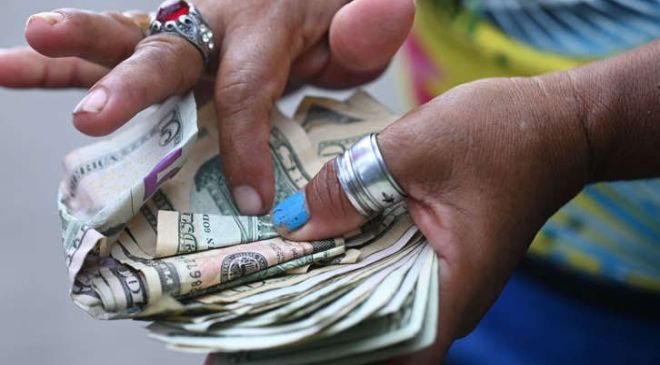
The dollar isn’t just America’s currency. It is the world’s primary reserve currency and the backbone of international trade.
Around 57% of global foreign exchange reserves are still held in US dollars, according to the International Monetary Fund. Oil, commodities and a large share of cross-border trade continue to be priced and settled in dollars.
That gives Washington enormous influence over the global financial system.
How do sanctions actually work?
Imagine losing access to the world’s most widely used currency.
Banks become reluctant to process payments. Companies find it harder to settle international transactions. Borrowing money from overseas becomes more difficult, and businesses often struggle to find trading partners willing to take the risk.
That’s why US sanctions carry so much weight.
Because so much global trade passes through the dollar, Washington can make it extremely difficult for sanctioned countries, companies or individuals to participate in the international financial system.
The revised Russia sanctions bill expands that pressure beyond Russia itself by targeting countries that continue buying large volumes of Russian energy.
Is de-dollarisation already happening?
To some extent, yes—but not on the scale that would threaten the dollar anytime soon.
Countries under heavy US sanctions have increasingly looked for alternatives to reduce their dependence on the dollar.
Research by economists Gregor Matvos and Brent Neiman found that banks in heavily sanctioned countries such as Russia, Belarus, Kyrgyzstan and Myanmar have shifted more of their business towards China’s renminbi.
Russia has dramatically expanded the use of the yuan in trade since Western sanctions cut it off from large parts of the global financial system.
Elsewhere, countries including BRICS members have discussed increasing trade in local currencies, while China has promoted its Cross-Border Interbank Payment System (CIPS) as an alternative payments network. Some governments have also experimented with digital payment systems and cryptocurrencies to reduce their reliance on dollar-based transactions.
Even so, the broader picture hasn’t changed dramatically.
Outside heavily sanctioned economies, there is little evidence of a widespread shift away from the dollar. IMF data continues to show that the greenback remains the world’s dominant reserve currency by a wide margin.
What is the Trump administration doing?
The answer, for now, isn’t fewer sanctions.
Instead, the administration appears to be trying to make them more targeted and more effective.
In recent months, the Treasury Department has quietly cleaned up its sanctions lists by removing dead individuals, inactive vessels and people no longer considered national security threats. It has also eased some sanctions on Venezuela and launched a new “reconsideration portal” to allow people and businesses to request removal from sanctions lists.
Treasury Secretary Scott Bessent has argued that sanctions work best when they are targeted, aggressive and tied to clear policy objectives. Sanctions that remain in place for years without changing a country’s behaviour, he has warned, can create unintended long-term consequences.
The administration has also explored ways to reinforce the dollar’s global role, including expanding dollar swap lines with partner countries and signalling that sanctioned nations could eventually regain access to the US financial system if diplomatic conditions improve.
Why does this matter?
The US has relied on the dollar to amplify the impact of sanctions for decades. If countries gradually reduce their dependence on the greenback, future sanctions could become less effective, making it harder for Washington to use financial pressure as one of its primary foreign policy tools.
That’s why the debate around the Russia sanctions bill goes beyond Russia itself. It raises a broader question about whether America’s biggest financial strength—its control over the global dollar system—could slowly be weakened if sanctions are used too often.
The dollar remains the world’s leading reserve currency and continues to dominate global trade and finance.
But Washington’s concern is less about what happens this year than what happens over the next decade. If more countries gradually build alternative payment systems and conduct more trade outside the dollar, one of America’s biggest sources of economic and diplomatic influence could slowly become less powerful.
Source : MSN