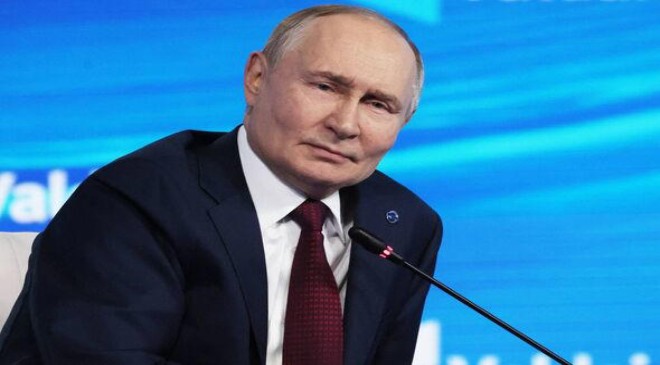
Ever since his murderous attack on the people of Ukraine in 2022, Vladimir Putin has banked on a number of factors being in his favour. He expected an increasingly weak and divided Europe, fatigued politically and economically as the war continued. He counted on the continued (and inexplicable) vacillation from the Trump White House and the support of the Russian oligarchy and domestic population. He believed that the Russian economy would survive, even prosper, from a short and victorious campaign.
Also Read :Trump’s longtime insult is coming back to bite him: analyst
Four years on, these bets have failed to pay off. Russia’s economy is deteriorating in ways that are increasingly difficult to disguise. Europe didn’t blink and after the Hungarian election is set to harden its line. Sanctions didn’t fade away and continued support for Ukraine in the US Congress, if not the White House, has been a strategic catastrophe for the Kremlin.
Also Read :Tom Leonard: How Elon Musk could become the most powerful man on the planet
For the first two years of the full-scale invasion, Russia’s economy confounded Western predictions. GDP grew by 4-5 per cent in 2023 and 2024, but it was an illusion. That growth was never organic. It was driven almost entirely by a massive, unsustainable injection of military spending – a classic case of war Keynesianism that papered over the cracks.
Also Read :The mystery behind Tesla stock’s sudden rise
Now the skies are dark with chickens coming home to roost. GDP growth has slowed sharply, with the IMF forecasting just 0.6 per cent in 2025 and 1 per cent in 2026. According to the governor of the Russian Central Bank, Russia’s economic resources – both labour and production capital – are exhausted.
The fiscal position is grim. The 2025 federal budget deficit reached nearly 3 per cent of GDP, five times higher than the 0.5 per cent deficit originally planned. Russia’s sovereign wealth fund, the National Welfare Fund, has been largely depleted to cover the shortfalls of 2024 and 2025. Around 70 per cent of the liquid assets of the fund have gone, a loss of around £80bn. Meanwhile, the Central Bank held its key interest rate at 21 per cent through much of the period trying to contain inflation – suppressing investment and consumer spending in the process.
Also Read :Read your daily horoscope: Wednesday, 15 April 2026
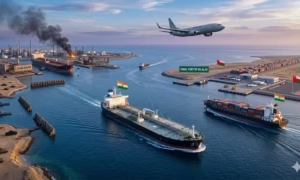
At the heart of Russia’s fiscal crisis is the collapse of oil revenue. Russia’s war machine is bankrolled largely by hydrocarbon exports, but sanctions have forced Moscow to sell its main crude blend, Urals, at a steep discount to the global Brent benchmark. Before the invasion, that discount was typically one to two dollars per barrel. By early 2026, it had widened to approximately 29 dollars per barrel, as tightening Western sanctions – including US measures against Rosneft and Lukoil that came into force in late 2025 – piled pressure on Russia’s most critical industry. Rosneft reported a 70 per cent collapse in profits in the first nine months of 2025.
To compensate for its falling oil revenues, the Kremlin raised VAT from 20 per cent to 22 per cent, lowered the threshold for businesses required to pay it, and introduced new technology levies. The war’s costs are being passed down to ordinary Russians. Worse still, as it is much easier to transform a peace economy into a war economy than vice versa, the outlook remains bleak. Military spending now stands at approximately 7.3 per cent of GDP – double its pre-invasion level – and accounts for over 40 per cent of the federal budget. One rouble in every two of tax revenue goes to the war effort.
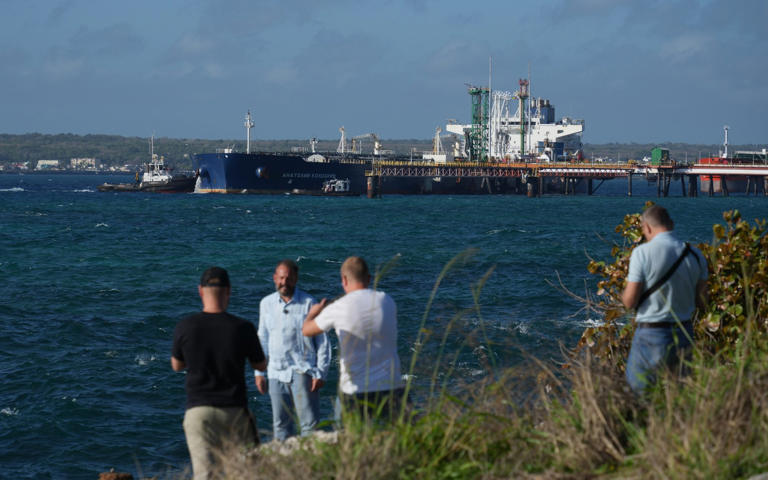
The Iranian conflict has offered some respite with a large but likely temporary increase in oil revenue. At peak prices, Moscow will gain around $150m per day in extra budget revenue, though this still compares to daily war spending of between $550m and $900m. This makes the case for interdiction of Russia’s dark-fleet oil all the more important to dry up Russia’s war funding. Britain must step up to the plate and Keir Starmer must start to behave as a prime minister in a national security emergency rather than the vassal of his attorney general, Lord Hermer.
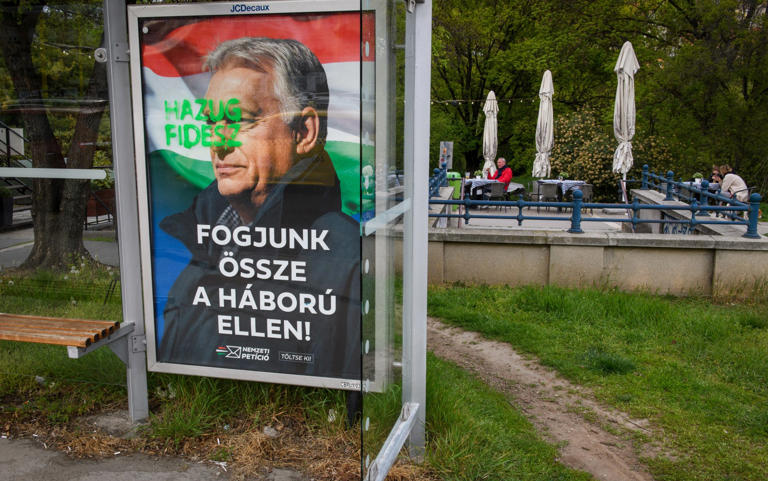
It is likely that the €90bn loan package for Ukraine, blocked for over a year, now stands to be released. The broader signal, that Kremlin-aligned governments can be voted out, will reverberate among Europe’s populist parties.
Also Read :Your daily horoscope: April 13, 2026 predictions
Putin faces a strategic environment in 2026 that is considerably more hostile than he anticipated when his tanks crossed the Ukrainian border in February 2022. His economy is not yet in free-fall but the trajectory is unmistakably downward: depleted reserves, a ballooning deficit, crushing interest rates, a broken oil revenue model, and a population increasingly bearing the costs of a war sold to them as a brief and victorious operation.
This is the time to act, to tighten the vice on a warmonger who represents the biggest threat to European security. The UK Government must break out of its recent pattern of international self-harming and rise to the challenge.
Source :Msn