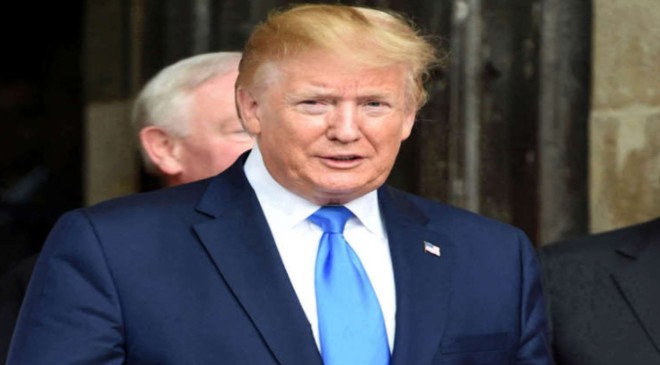
The likelihood of President Donald Trump sending out the previously discussed $2,000 tariff checks remains low, according to the betting odds tracker on Kalshi.
The tracker set the chances before July of this year at just 16 percent, while the likelihood increased to 28 percent before August.
Also Read:Tesla earnings will be ‘ugly.’ It might not matter for the stock.
Why It Matters
In a departure from Trump’s earlier statements indicating that payments would be sent in mid-2026, the president on Tuesday said that the tariff checks would arrive by the end of the year—but experts remain skeptical that Americans will receive such payments at all, with one saying, “the math simply doesn’t support it.”

What To Know
Trump said in November that nearly all Americans, besides higher earners, would be paid $2,000 as a result of the revenue generated by his tariffs.
“The reason we’re even talking about it is that we have so much money coming in from tariffs that we’ll be able to issue at least a $2,000 dividend and also pay down debt for the country,” he said.
The president added on November 17 that the checks would come “probably in the middle of next year.”
The Kalshi betting tracker has those odds at 16 percent before July, 28 percent before August and 35 percent before 2027.
Also Read:CNN shares breaking news alert as the EU launches investigation into Elon Musk’s Grok
Kevin Thompson, CEO of 9i Capital Group and host of the 9innings podcast, said the entire idea of a tariff rebate is unlikely because there’s no credible evidence that tariffs have produced a meaningful net surplus. “In fact, the deficit is projected to eclipse $39 trillion by early March, according to the Joint Economic Committee,” he told Newsweek. “If excess revenue truly existed, the logical question would be why debt levels continue to hit record highs at an accelerating pace. Are we paying anything down, or simply spending more?”
Also Read:Elon Musk says Tesla self-driving cuts insurance in half, but something smells fishy
If rebates were sent out, inflation would also likely skyrocket, experts say.
“We would stoke inflation, increase spending we don’t have through additional debt, and fail to deliver on the administration’s claims of reducing the national debt,” Thompson added. “It would be stimulus dressed up as fiscal discipline, and the math simply doesn’t support it.”
What People Are Saying
Alex Beene, financial literacy instructor for the University of Tennessee at Martin, to Newsweek: “While betting on the possibility of $2,000 tariff rebate checks has steadily shifted to an increase in those thinking the distribution could occur, the odds are still heavily in favor of such a check not occurring. Questions remain as to whether the Supreme Court will allow the tariffs to continue as they currently do, calling into question if the billions of dollars brought in will remain in the federal government’s possession or will need to be refunded.”
Also Read:Reeling rupee receives a lifeline from dollar’s plunge to a near 4-month low
Drew Powers, founder of Illinois-based Powers Financial Group, to Newsweek: “Despite my absolute distaste for gambling, if I were forced to take one side or another, I would take every ‘no’ bet on the board. I just don’t see it happening any more than our $5,000 DOGE checks that never materialized.”
Michael Ryan, finance expert and founder of MichaelRyanMoney.com, to Newsweek: “This needs Congressional approval, and you’ve got GOP deficit hawks who look at the numbers and see 93% probability the national debt ends the year above $38 trillion. You’re not getting $450 billion appropriated for checks when everyone’s panicking about the deficit. Even if somehow it did happen, it blows up the inflation story. You’re pumping $600 billion into an economy that’s already running hot with unemployment low.”
Also Read:Daily horoscope January 26, 2026: Today’s predictions for your star sign
What Happens Next
If Congress secures the tariff revenue promised, according to Beene, many are still pushing for the funds to go toward paying off America’s national debt.
“Even if the revenue remains, debate lingers on how the tariff funds should be used, with many calling for them to go toward paying part of the ballooning national deficit,” Beene said. “Still, some are betting on predictions of a huge shift in the midterms triggering renewed talks of these rebate checks in a bid to gain approval from voters who are growing increasingly frustrated with current economic policy.”