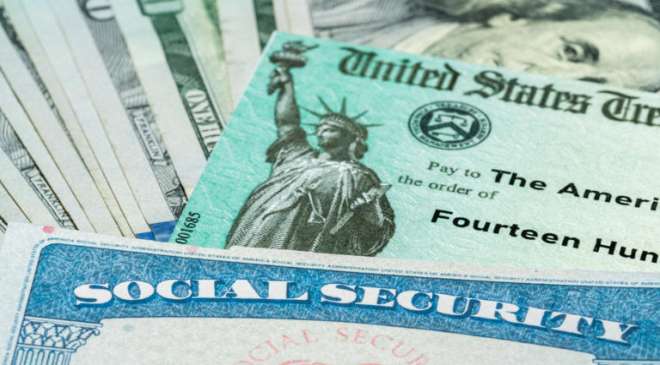
For years, concerns have swirled over the long-term financial stability of America’s cornerstone retirement program. Today, however, Social Security’s fragile fiscal condition has become a pressing, urgent challenge.
Also Read:-Tesla registrations halve in France and Denmark as Model Y refresh struggles
The Social Security retirement fund is projected to run out of money by 2033. If Congress doesn’t take action, those receiving benefits could face a significant drop in their monthly payments.
“This is a tinderbox issue,” Gopi Shah Goda, director of the Retirement Security Project at the Brookings Institution, told Axios. “It’s hard to deal with because it’s a long-term problem – but that time is coming.” Ironically it comes as 5 states will see bigger boost in Social Security payments for 2026 than rest of the US.
Also Read:-Your daily horoscope: November 30, 2025 predictions
According to the recent trustees’ report, if the Social Security retirement fund depletes by 2033, the program would only be able to pay 77% of scheduled benefits.
The average beneficiary receives $2,008 a month, implying a reduction to $1,546, Axios reported. That’s a substantial loss of income for those who depend on the program.
Also Read:-Your daily horoscope: November 29, 2025 predictions
“It didn’t have to be this way,” Maya Macguineas, president of the Committee for a Responsible Federal Budget, told Axios. “If we had done this decades ago, any of these changes would have been so much smaller.”
“Instead, we’ve waited until the last minute, and it will be shocking how big they’ll have to be to avert insolvency,” she said. “The cost of waiting is tremendous, and we’re already going to be bearing it.”
What can Congress do to prevent the reduction in Social Security checks?
Also Read:-Newly released facts from Social Security demolish Elon Musk’s fraud claims — again
1.) Raising taxes
Social Security is funded by payroll taxes representing 12.4% of wages (including the employee and employer shares), with no tax on earnings above $176,100 (which rises with inflation).
Also Read:-Putin Has No Way to Leave the Ukraine War a Winner
A method could be to eliminate or change the cap, so that more income is subject to Social Security tax.
However, it won’t be that simple. For people with high incomes, increasing the Social Security tax would effectively raise their tax rate by 12.4 percentage points-a huge jump. To put it in perspective, the top federal income tax rate has fluctuated between approximately 30% and 35% over the past several decades, so this would be a significant increase by historical standards.

2.) Benefit cuts
There are ways to trim benefits that avoid affecting the people most dependent upon Social Security benefits.
The steepest cuts could be applied to those with ample other income or assets, but even retirees with substantial pensions or 401(k) savings would likely be dissatisfied to see their Social Security benefits reduced.
How can Congress intervene to reset Social Security in 2032?
If Congress cannot find a way to reset Social Security in 2032, it could fill the funding gap by using general tax revenues. This, however, comes with its own caveats. It could lead to higher interest rates and less cash available for other national priorities, such as infrastructure or defense.
However, current or soon-to-be retirees can take comfort in the fact that there is currently no political appetite for large-scale cuts, so you can rely on Social Security. America, nevertheless, now faces a complex reckoning that requires urgent attention.