Key Points and Summary – After more than three years of war in Ukraine, Russia’s economy is showing severe signs of strain.
Also Read:Rupee rally set to hit speed bump on soggy Asia FX, risk-off tone
-Moscow reported a $51 billion budget deficit for the first eight months of 2025, and its central bank has warned of depleted labor, production, and financial reserves.
Also Read:Dear Tesla Stock Fans, Mark Your Calendars for October 22

-Sanctions have driven up import costs, forcing the Kremlin to propose defense budget cuts.
-While a complete collapse is not imminent, Russia is now dangerously reliant on a single lifeline: discounted, long-term energy sales to China and India, even as the EU plans further sanctions targeting its financial and energy sectors.
Ukraine War: Russian Economy Relying on Fuel Exports as Sanctions Hit Hard
Over three years ago, Russia launched its full-scale attack on Ukraine – and its economy can no longer hide the negative impacts of this cataclysmic decision.
New evidence suggests that global sanctions, a growing budget deficit, and a rising reliance on energy sales to Asia now seriously imperil Moscow’s financial stability.
Also Read:Why Tesla May Blow Out Third-Quarter Earnings Estimates
What We Know:
Earlier this month Russia’s Ministry of Finance announced a $51 billion budget deficit for the first eight months of 2025, exceeding the Kremlin’s annual forecast.
According to Reuters, internal ministry documents propose slashing next year’s defence budget by $11 billion, roughly a 7 percent cut.
However, Craig Kennedy of Harvard University’s Davis Center recently told the Qatari state-funded Al Jazeera broadcaster that funding for the war effort “is on track to contract by 15 percent this year.”
Back in June, Russia’s central banker, Elvira Nabiullina, said that the country had depleted its reserves of “labour force, production capacity, capital in the banking system, and funds from the National Welfare Fund.”
Also Read:Trump move spares troops’ pay, but Republicans warn shutdown risks remain
The fund’s liquid assets have plunged by a third to $34 billion, and they could be gone entirely by 2026.
Meanwhile, defence-related firms are already reportedly struggling to repay around $180 billion in government-backed loans.
Moscow has been able to keep its economy superficially afloat in previous years by raiding energy windfalls and forcing Russian banks to funnel credit into weapons manufacturing. GDP grew more than 4 percent in both 2023 and 2024, despite the grinding and expensive conflict.
Sadly for President Vladimir Putin and his cronies, even Russian officials like Nabiullina are now conceding that this growth was propped up by an overstretched labour market and the overuse of funds from the National Welfare Fund.
Also Read:Trump says Modi has assured him India will not buy Russian oil
Naturally, the sanctions sparked by invasion of Ukraine are a huge part of Russia’s economic woes. Moscow is estimated to be paying two to three times the usual market prices for vital material imports, given that it must route such purchases through non-sanctioned intermediaries.
Few are claiming an economic collapse is on the immediate horizon, however.
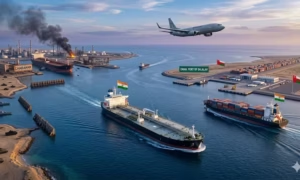
While gas and oil are still flowing to India and China, the Kremlin may enjoy at least one lucrative lifeline. Russia has sold discounted multi-year contracts to Beijing in exchange for up-front payments, including a 30-year gas delivery deal worth $400 billion US dollars.
U.S. President Donald Trump has claimed he can pressure India into boycotting Russian fuel, but there is no evidence that such a drastic move is on the cards.
Still, Europe and its allies continue to push for a stricter response to Putin’s war.
The European Union’s planned further sanctions package proposes banning all imports of Russian refined petroleum products and restricting the so-called “shadow fleet” of ships Moscow is using to avoid sanction-related price caps on its oil exports.
Brussels is also mulling over whether to vow to finance Ukraine’s reconstruction with the almost $300 billion in frozen Russian assets.
The United Kingdom and the U.S. have also, at times, expressed support for such measures.
Still, as long as there is demand for hydrocarbons, Russia will obviously do its darndest to profit from its huge reserves of them.
Moscow’s economy does not have to perform at full capacity to keep this bloody war going, especially when Putin knows his political career depends on victory.